Dental Bonding in Łódź. When Is Composite Enough?
When composite will do and when a crown is the better choice.
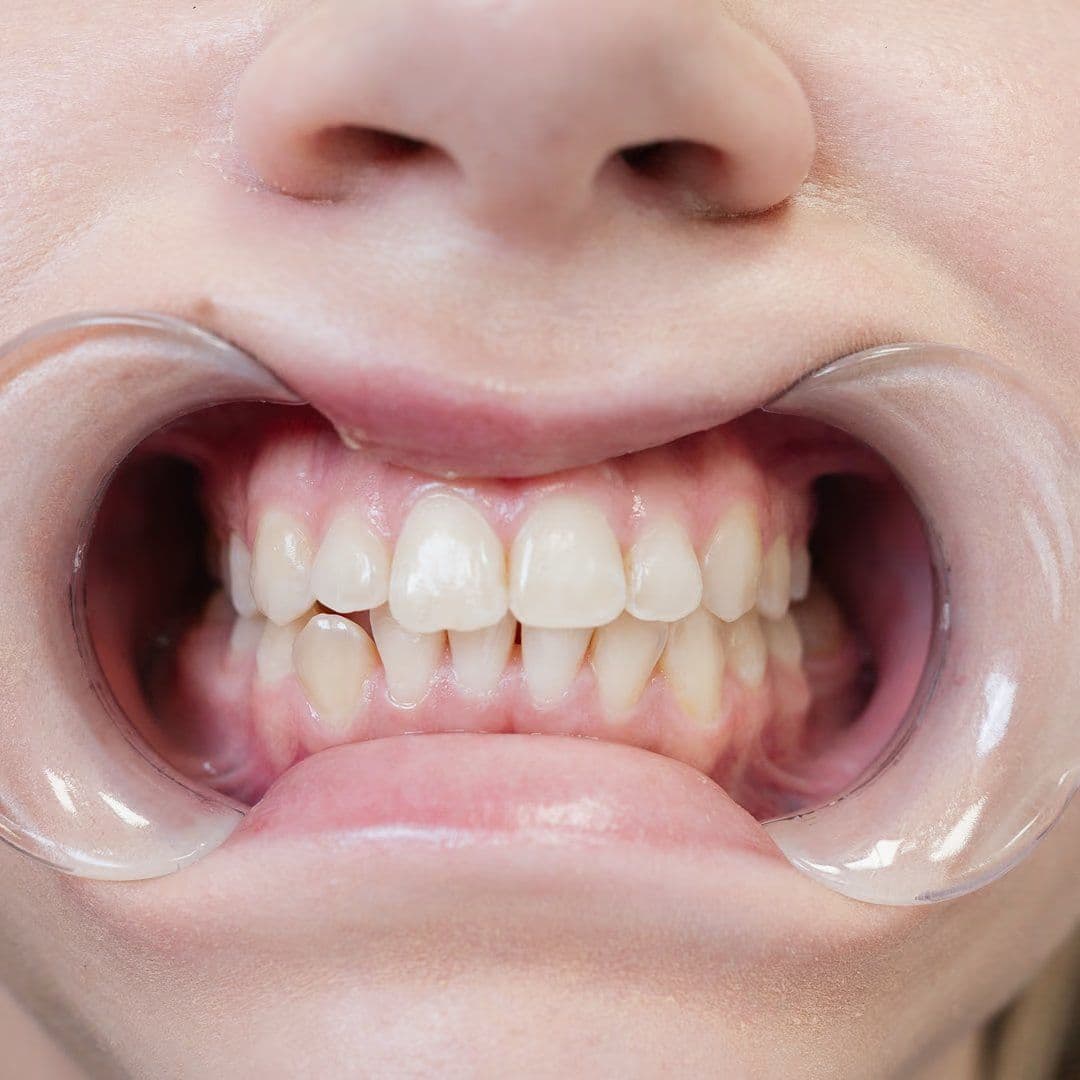


We will look at your front teeth and tell you whether composite is enough or a crown would be better.
25.11.2026
When composite will do and when a crown is the better choice.
A chip after a knock, a gap between the front teeth, an uneven edge, a dark spot that a cleaning will not shift. Small things, but on front teeth they show every time you smile. Most of the time the tooth does not need to be ground down for a crown. Usually dental bonding is enough. It is a composite restoration, and at iDenta in Łódź we normally complete it in one visit.
The dentist applies tooth-coloured composite and builds up the missing part layer by layer, hardening each layer with a curing light and polishing at the end. Composite bonds adhesively to enamel, which simply means it sticks to the surface. That is why healthy tissue usually stays where it is; a gentle surface preparation is enough.
Composite works best for small and medium flaws on a tooth that is mostly healthy. For a large defect or a very dark tooth (after a root canal, for example), other options tend to work better. Whether composite is enough in your case is something the dentist will tell you after an examination.
Often several flaws at once, in a single visit.
After a fall, or after biting on something hard. We rebuild the missing part of the incisor or canine.
A small diastema between the front teeth can often be closed by slightly widening them. No braces needed.
We even out the length of the incisors.
The ones a professional cleaning does not remove.
A tooth that is too short, too narrow or does not match its partner on the other side.
Replaced with new ones matched to your shade.
The main difference is how much healthy tooth has to be ground away, which also drives the number of visits and the price. These figures come from our price list. The final cost depends on the number of teeth and the scope of work, and the dentist draws up the plan after an examination.
| Option | What it solves | Visits (usually) | Price at iDenta |
|---|---|---|---|
| Front tooth restoration (bonding) | chips, small gaps, uneven edges, stains | 1 visit | from 450 zł |
| Artistic restoration | changing shape and shade when the most natural look matters | 1 visit per 1–2 teeth | from 500 zł |
| E-MAX or zirconia crown | a badly damaged tooth, a tooth after root canal treatment or with a large filling | several, usually within 1–2 weeks | from 1800 zł |
Front tooth restoration at iDenta costs from 450 zł. We use G-Aenial composite, which mimics the translucency and lustre of enamel. One tooth usually takes one visit of 60 to 90 minutes. Related treatments are in our dental treatment section.
When the shape needs a bigger change or several teeth are involved, we choose artistic restoration (from 500 zł) with Estelite Asteria composite. The dentist recreates dentine and enamel separately, with the natural shade transition near the biting edge. Usually one or two teeth are done per visit.
Composite has limits. A badly broken tooth, or one that has had root canal treatment, first needs a tooth reconstruction (from 450 zł) and often a crown afterwards. For front teeth, a full-contour E-MAX crown made of lithium disilicate or a full-contour zirconia crown both work well, each from 1800 zł. A crown means preparing the tooth on all sides, so for minor flaws we usually go with the more conservative composite. For the same reason, bonding is often seen as a gentler alternative to porcelain veneers.
Whitening gel does not change the colour of composite, so a restoration stays the shade chosen on the day. If you are thinking about teeth whitening (from 900 zł), do it before bonding. Dentists usually wait about two weeks for the enamel shade to settle before matching the composite. A professional cleaning comes before whitening; our article on professional teeth cleaning explains how often you need one.
iDenta dentist's tip: Patients often ask us for a shade “just a bit lighter than mine”. On a single front tooth, that difference stands out straight away, especially in flash photos. So we match the colour to the neighbouring teeth. If you want a brighter smile overall, start with whitening.
One tooth usually takes 60 to 90 minutes, and anaesthesia is often not needed.
The dentist looks at the size of the flaw and how your teeth meet.
Right at the start, before the tooth dries out. Dry enamel looks lighter.
We gently prepare the enamel and apply a bonding agent.
Thin layers of composite, each hardened with a curing light.
A final bite check, then polishing to a high shine.
Composite is strong, but the biting edge of an incisor takes the most load. Chips usually come from habits such as biting nails or pens or opening packaging with your teeth. Nuts, ice and hard crusts are better left to your back teeth. For contact sports, wear a mouthguard. Coffee, tea, red wine and smoking can stain composite over time.
iDenta dentist's tip: Night-time grinding is a frequent reason composite edges chip, and many people have no idea they do it. If your jaw muscles feel tired in the morning, or someone has heard you grinding in your sleep, tell us before treatment. The dentist will take it into account when planning and advise you on protecting your teeth at night.
How to keep the restoration looking new for longer.
No coffee, tea, red wine or cigarettes.
Something feels off when you bite, or there is a rough edge? Come back and the dentist will adjust it.
Brush twice a day and floss. Skip abrasive whitening toothpastes, which dull composite.
Check-up and professional cleaning. The dentist looks at the restoration at the same time.
Composite can lose its shine or change shade slightly. Polishing or a small top-up usually sorts it.
We will look at your front teeth and tell you whether composite is enough or a crown would be better.
Mon – Fri: 09:00 – 19:00
Sat: 10:00 – 16:00

